

Romance isn’t dead, but for some of the brands marketing around Valentine’s Day this year, it got something of a reality check.
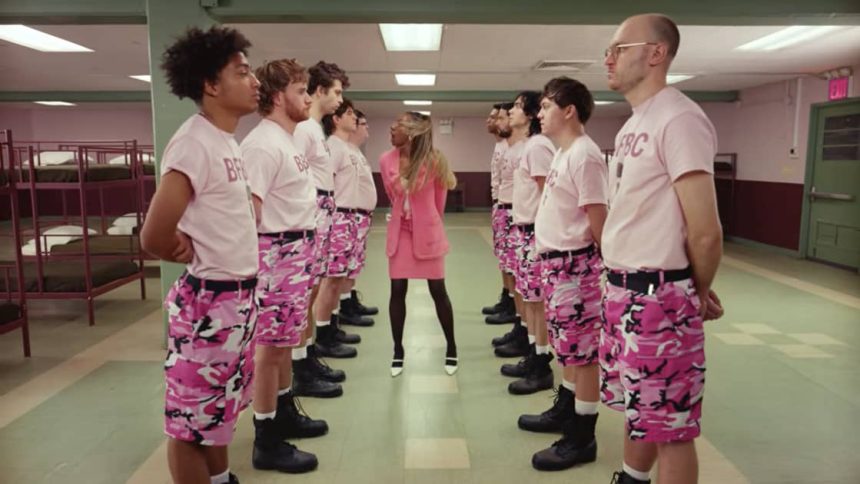
DoorDash created a “Bad Boyfriend Bootcamp” ad where low-effort partners were instructed on how to order flowers. Sweethearts Candies updated the phrases on its heart-shaped candy with realisms like “split rent” and “cook for 2” to be relevant “for love in this economy.” Just a few days after Valentine’s, Reformation debuted a new collection with divorce attorney to the stars Laura Wasser, complete with a “Dump Him” sweatshirt. And JCPenney held an “Ex-Change,” with attendees able to swap jewelry from past relationships for something new.
Romance is still very much in, with brands creating short-form dating series on social media and shows like Heated Rivalry breaking through the stratosphere. But some marketers are looking to create counter-programming in an effort to reflect the feelings of anyone who isn’t in the mood for love. It’s not an entirely new idea—remember the viral Vogue essay questioning if having a boyfriend is embarrassing?—but some brand marketers are finding power in exploring the fact that some romantic expectations don’t always match up to reality. (There’s a great scene in the oft-misunderstood rom-com 500 Days of Summer using splitscreen to demonstrate as much.)
“What’s happening in culture today is that [romantic] relationships are continuing to get more and more openly examined,” Megha Parikh, executive strategy director at VML, told us, adding that some brands are choosing to reflect that.
“In order to draft off the pop-culture fun of Valentine’s Day,” she said, “you can’t fake it.”
All too real
For some brands, reflecting the realities of the gift-giving expected around Valentine’s Day offers a relatable way into the holiday.
That’s what DoorDash did with “Bad Boyfriend Bootcamp,” which rolled out last week on social media starring comedian Ziwe and reality star West Wilson. The spot is a cheeky riff on Full Metal Jacket, with Ziwe in the role of drill instructor for a crop of identically dressed bad boyfriends to reflect the realities of gift giving for the holiday.
Last year, something like “80% of all of our Valentine’s Day week flower orders were placed on Valentine’s Day,” Zaria Parvez, head of social at DoorDash, told us, citing DoorDash research from 2025, and those last-minute gift-givers served as the inspiration for the spot.
Beyond that, the comment section of TikToks of men bragging about the “awesome gifts they’ve given” inspired the idea, she said.
Get marketing news you’ll actually want to read
Marketing Brew informs marketing pros of the latest on brand strategy, social media, and ad tech via our weekday newsletter, virtual events, marketing conferences, and digital guides.
“The comment section was like, ‘Who trained you?’” she told us. “That idea of training men to do the bare minimum, or to give a gift, is kind of what sparked the whole idea.”
Creating a satirical spot for the holiday rather than a pat promotion for the brand, Parvez said, made it more likely that the message would break through.
“The problem that we all face as brands is people hate seeing messaging of like, especially on social, like, ‘Buy this, do this,’” she said, while messages that are “satirical, using talent that’s known for doing this specific thing, almost makes it feel a little bit more natural.”
It’s an approach that JCPenney also explored in its Ex-Change event, which was hosted alongside Love Island USA contestant and creator Amaya Espinal. The idea, where attendees could swap old jewelry for new items, was designed to offer a stand-out take on Valentine’s Day, according to Dana Buckhorn, a creative director at Mischief, the agency behind the effort.
“The instinct on Valentine’s Day is to lean into the lovey-doveyness of it all,” Buckhorn told Marketing Brew in an email. “But JCPenney’s whole rebrand is built on the unexpected. So instead of celebrating love that lasts, the team chose to celebrate all the love that didn’t.”
In doing so, the team worked to “create a fun solution to a relatable problem, and reward singles on a day that intentionally excludes them,” she said. “But if we’re being completely honest, this is mostly just a way to get rid of the dolphin necklace from my high school ex.”
As some young people in the US express dissatisfaction with dating apps and dating fatigue in general, it’s possible that Valentine’s Day counter-programming could become more commonplace as more brands wise up to consumer sentiment. For now, though, Parikh said she expects the against-the-grain messaging to stand out.
“I don’t think that enough of the culture has latched on to a modern understanding of how romantic relationships are actually working,” Parikh said. “There’s so many brands that are still in the space of ‘Two for $50 prefix meal,’ ‘Reignite your love for your partner’ messaging…I think brands like JCPenney…are going to get a lot more than their fair share of their conversation in this space because it’s still just not the norm.”
Read the full article here